Save the Music. Save the Art Programs. Strengthen Community Resilience.
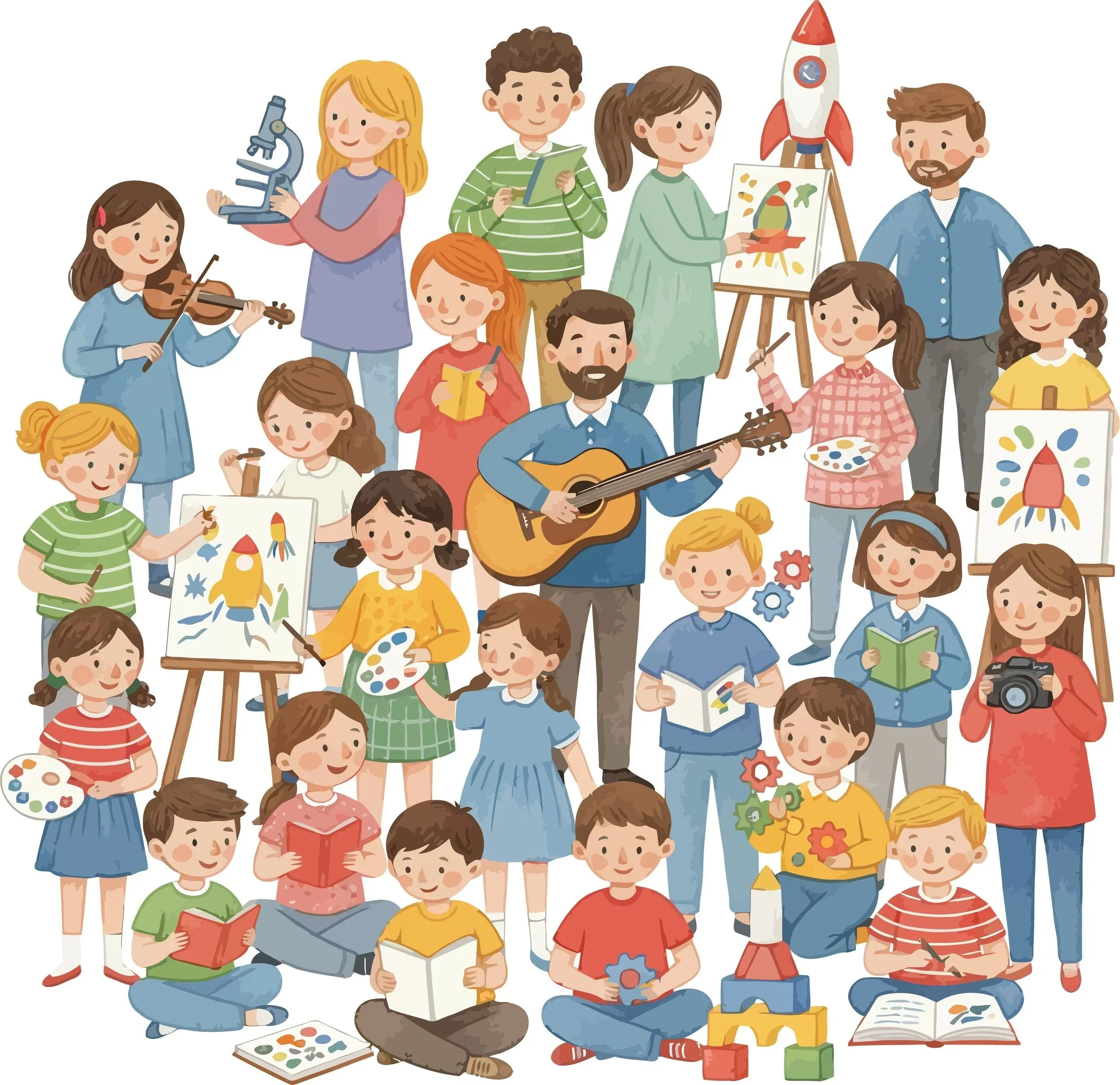
Make a difference!
During budget cuts, arts and youth programs are among the first to be eliminated.
Music. Choir. Band. After-school art. Community youth centers. Creative mentorship.
They get framed as "extras." But if we're going to talk about community resilience, we need to be clear-eyed about these programs:
They are community infrastructure.
Music is a developmental infrastructure for children.
Pediatric and public-health studies reveal that music is not just fun: the American Academy of Pediatrics considered music "vital" for early development and school readiness in the areas of intellectual, social-emotional, motor, language, and overall literacy development.
This matters because resilience does not begin in an emergency operations center.
It starts with skills such as self-regulation, communication, confidence, belonging, and collaboration during childhood. So music builds those skills while giving kids a way to be seen and heard. The arts improve health and well-being throughout the life span
The World Health Organization, in its synthesis of evidence on arts and health (including over 3,000 studies), has described the arts as playing a major role in improving and maintaining health, preventing illness, and supporting therapy and rehabilitation throughout the life course.
When a community cuts funding for music and the arts, particularly for children, it's not simply a 'nice-to-have.' They're eroding the protective factors for mental health and connection.
Arts participation builds social cohesion, a resilience superpower. The degree of social cohesion, or how much people trust, know, and come together in times of hardship, is often what makes communities resilient.
Recent work on community arts participation finds that participation reflects and contributes to social cohesion and well-being through the mechanisms of experience and identity formation.
This is similar to what school music programs and youth arts spaces do: they gather kids and families repeatedly in structured joy and teach us how to be a "we."
Music supports executive function, the "life skills" behind resilience. Executive function skills such as working memory, inhibitory control, and cognitive flexibility help children plan, persist, manage impulses, and adapt under pressure.
In a recent meta-analysis published in Frontiers in Psychology, a small positive effect of music training on executive function (inhibitory control, working memory, and cognitive flexibility) was reported among young children.
Those are resilience skills. Not the theoretical ones, but the real ones kids depend upon for school, marriage, and, later, emergencies.
At HeakeSpeak, we center Accessible Literacy & Space, and we mean literacy in the broad, human way: communication, expression, participation.
For many children with disabilities, music is not an "extra"; it may offer pathways to:
communication without the use of speech or writing,
regulation of sensory and emotions.
belonging without having to "perform normal."
authentic participation alongside peers.
Music spaces can be among the most intentionally inclusive environments a child encounters, because rhythm, repetition, movement, and communal performance lower barriers and expand voice.
How this relates to HeakeSpeak.org
HeakeSpeak's resilience model is a chain-link model: communities are protected to the extent that we build multiple strong links among programs, neighbors, schools, mutual aid networks, accessible communication, and open reporting mechanisms.
There are no side links to youth or music programs. They’re load-bearing links.
At HeakeSpeak.org, we see this as a chain we want to make stronger through communication, collaboration, holding space for the community, and tools to keep communities accountable and safe. And we keep coming back to this truth:
If we want resilient communities, we must create the spaces where children learn the ties of connection, expression, and belonging.
A call to action
If your town/city/district is cutting music or youth programs, attend meetings.
But what is the plan for preserving student well-being, belonging, and accessibility if these spaces are lost?
Advocate for funding and inclusive design. In partnership with community organizations, artists, and accessibility leaders, build, don't erase, community capacity.
Resilience isn't only about recovering from harm.
Resilience is what we build before the damage is done, when children and communities keep singing while the world shakes.
References
American Academy of Pediatrics (AAP), "Infants and Music Media" (2025).
World Health Organization (WHO), What is the evidence on the role of the arts in improving health and well-being? (2019).
Sonke et al., "Relationships between arts participation, social cohesion, and wellbeing" (integrative review; community context).
Lu et al., Effects of music training on executive functions… Frontiers in Psychology (2025).
#ArtsAreEssential
#FundYouthPrograms
#MusicBuildsResilience
#CreativeCommunities
#InclusiveEducation