It’s Time to Heal: Building Community Resilience Beyond the Divide
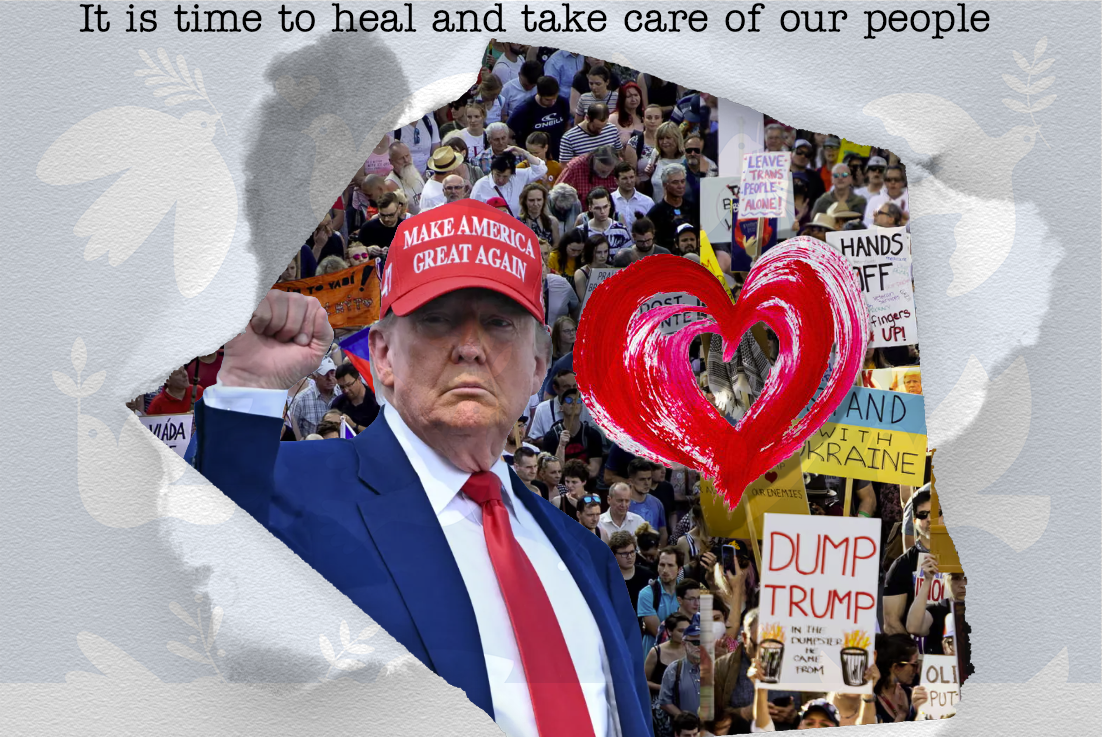
From President Donald Trump to the progressive wing of the Democratic Party led by people like Bernie Sanders and Alexandria Ocasio-Cortez, the divide in today's U.S. is deeper than ever.
Families feel it. Schools feel it. Local governments feel it.
But a truth we cannot ignore is that it may be headline national politics, but there is community resilience.
While we may not control the federal narrative, the election cycle, or the media narrative, we can control how well-organized, connected, and inclusive our communities are.
Right now, resilience is more important than ideology.
Decades of research support what survivors already know:
Communities with high social cohesion recover faster.
The National Academies' 2012 report Disaster Resilience: A National Imperative stresses the importance of local capacity and cross-sector and participatory planning for community resilience (National Academies, 2012).
FEMA's "Whole Community" approach requires emergency management to engage people with disabilities, faith communities, non-profits, and grassroots organizations, rather than simply other governmental agencies.
As Aldrich & Meyer (2015) observe, social capital, including trust, networks, and civic participation, is one of the strongest predictors of post-disaster recovery outcomes.
In short, friendly ties matter more than political ties when the lights go out.
How Accessibility Is Essential to Healing
At HeakeSpeak, we think that bridging the divide begins with something concrete:
Accessible communication.
Accessibility is not partisan. It is human.
Examples include inaccessible emergency messages, town websites not compliant with the WCAG, unclear language in evacuation instructions, and lack of inclusion of people with disabilities in emergency planning.
Resilience fractures.
There are numerous federal statutes, including the Americans with Disabilities Act of 1990, Section 504 of the Rehabilitation Act of 1973, and FEMA Guidance, that mandate inclusion.
But more than compliance, inclusive systems build trust.
And trust is the antidote to polarization.
When communities know that:
Everyone will receive information,
Everyone can report concerns,
Everyone is consulted in the planning.
Everyone’s dignity is protected,
Then we begin to repair the bonds of society, politics has frayed.
Preparedness Is Common Ground
HeakeSpeak’s work focuses on:
Inclusive disaster preparedness and recovery
Accessible digital literacy
Community reporting systems (such as our HeakeSpeakSOS initiative currently under development)
Cross-community volunteer networks
Training in accessibility and emergency management issues
Preparedness is not a partisan blue or red issue.
Wildfires don't stop for voter registration. Floodwaters don't check your politics. Economic shocks do not wait for campaign cycles.
Preparedness requires cooperation.
The FEMA Whole Community doctrine defines resilience as tapping into "the full capacity of the private and nonprofit sectors, including individuals with disabilities". This is consistent with global humanitarian standards (e.g., ALNAP) that emphasize accountability, inclusion, and leadership by the affected population in the local context.
Resilience is strongest when communities know one another before the disaster strikes.
The Psychology of Division: and the Way Forward
In political psychology, researchers such as Iyengar et al. (2019) observe that polarization manifests as increased animosity toward partisans of the opposing party.
However, research on community resilience suggests that shared projects reduce hostility.
When it comes to local, down-to-earth issues like food justice, emergency preparedness, access to schools, and crime watch, the party member becomes a community member.
That shift matters.
It turns from: "Who did you vote for?" to: "How do we protect each other?"
Healing Is Practical. Healing does not mean avoiding differences.
Healing is where we put our energy, and we can change.
We influence over:
Whether our town website meets WCAG 2.2 standards.
Whether emergency shelters follow the ADA.
Whether the communication systems reach people who use AAC.
Whether youth are taught digital literacy and civic responsibility.
This may include building volunteer networks before disasters.
That is real power.
At HeakeSpeak, community resilience is built on:
Accessibility audits and training
Inclusive literacy initiatives
Crowd-sourced reporting tools
Cross-sector collaboration
Integration of technical systems with human training interventions
That is not a theory. It is operational resilience.
The Future Will Be Stabilized Locally
The National Academies report says that building resilience requires "shared responsibility across all levels of society." Not just federal. Not just state. Not just elected leaders.
We may not fix national politics overnight. But we can: Strengthen local networks. Improve inclusive communication systems. Train volunteers. Support educators. Prepare shelters. Build trust.
Resilience itself is not loud. It does not trend. It emerges victorious in cable news debates. But it saves lives.
A Call to Build, Not Break
Whether you're a conservative, a progressive, an independent, a libertarian, or simply politically fatigued, I invite you:
Build where you live.
Build up the systems you can reach.
Invest in preparedness. Invest in accessibility. Invest in inclusion. Invest in trust.
Because when the next storm comes, literal or social, it will not be national rhetoric that protects us.
And the strength of our communities will be.
And that work starts now.
Selected References
National Research Council (2012). Disaster Resilience: A National Imperative.
FEMA (2011). A Whole Community Approach to Emergency Management.
Aldrich, D. P., & Meyer, M. A. (2015). Social Capital and Community Resilience.
Iyengar, S., et al. (2019). The Origins and Consequences of Affective Polarization in the United States.
Americans with Disabilities Act of 1990.
ALNAP (Active Learning Network for Accountability and Performance in Humanitarian Action).
#ResilientCommunities
#MutualAidMatters
# AccessibilityForAll
# ClimateAndCommunity
#PreparedNotPanicked